“There is one grand lie — that we are limited. The only limits we have are the limits we believe.” Wayne Dyer
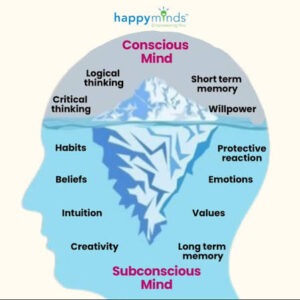
“Our minds are divided into the conscious and subconscious, and while the conscious mind is our reasoning and logical self, the subconscious is the bedrock of our deepest beliefs and perceptions. The seeds of unlimited potential flourish or wither away within the fertile soil of your subconscious mind. When you plant positive, empowering beliefs in your subconscious, you set the stage for limitless growth.
What we firmly believe we make real in our lives. Our beliefs are like a script, and the subconscious acts as a diligent actor, playing out the scripts in the theater of your life. If your script is written with limitation and doubt, your life mirrors this limitation and doubt. 
However, when you rewrite these scripts to reflect abundance, success, and positivity, your life transforms to match these new beliefs. You can influence your subconscious by visualing your goals and affirming with conviction your goals as already achieved in present time.
You can communicate direc tly with the subconscious which is the fertile ground of unlimited possibility. This process bypasses the critical filters of the conscious mind, planting the seeds of your desires deep within. When Jesus says, “All things are possible with God,” he is saying that all things are possible with your subconscious mind.
Go out there and show the world that, indeed, there is no limit to what you can achieve. Are you still doubting that there is no limit? Pick up your Bible. There’s profound wisdom in the scriptures that explores the idea that all things are possible and there are no limits to what you can achieve. This concept is deeply rooted in spiritual understanding and reveals how the power of belief and imagination are instrumental in shaping your realtity.
“Jesus said unto him, ‘If thou canst believe, all things are possible to him that believeth.” (Mark9:23) This powerful declaration was not just an assurance; it was an invitation by Jesus to step into a realm where your power of belief transcends the boundaries of the physical world. To believe in limitlessness is to open the door to infinite possibilities. With this understanding, you must acknowledge that your perceived limits are often self-imposed.
“Now faith is the substance of things hoped for, for the evidence of things not seen.” (Hebrews 11:1) Faith, in essence, is the bridge between your current reality and the unseen, limitless world of possibilities. Through the creative act of imagination, we give substance to our hopes and dreams by visualizing and believing in a desired outcome. By aligning yourself with the limitlessness of the universe, you will manifest whatever you want.
“As a man thinketh in his heart, so is he.” (Proverbs 23:7) This is a profound piece of wisdom underscoring your mind’s transformative power. Our outer reality is a reflection of our inner world. And by cultivating limitless beliefs in our hearts and minds, we shape the course of our lives.
“And all things, whatsoever ye shall ask in prayer, believing, ye shall receive.” (Matthew 21:22) Prayer, in this context, is more than a petition. It is an active, creative process that involves asking and believing in unwavering conviction that what you seek is already yours without limits.
Your mind is the most powerful tool at your disposal. It’s the genesis of every reality that you experience. When you understand how to harness this power, you unlock doors to possibilities you never could have imagined. So, you must liberate your mind from the shackles of any limiting beliefs. What is limiting you now? What beliefs do you have that are limiting you? Creating a limitless mindset begins with awareness. Be aware of when a limiting thought comes up, and replace that limiting thought with a powerful one.”
Activate Your Unlimited Power: Discover The Boundless Possibilities That Lie Within, Brian Scott, pgs. 7-8, 13-14.
