 “Both suffering and happiness are of an organic nature, which means they are both transitory; they are always changing. The flower, when it wilts, becomes the compost. The compost can help grow a flower again. Happiness is also organic and impermanent by nature. It can become suffering and suffering can become happiness again.
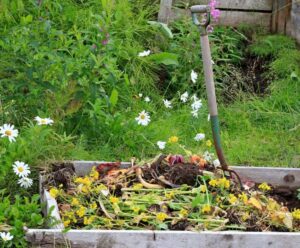
If you look deeply into the flower, you see that a flower is made only of non-flower elements. In that flower there is a cloud. Of course, we know that a cloud isn’t a flower, but without a cloud, a flower can’t be. If there’s no cloud, there’s no rain, and no flower can grow. You don’t have to be a dreamer to see a cloud floating in a flower. It’s really there. Sunlight is also there. Sunlight isn’t flower, but without sunlight no flower is possible.
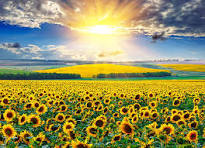
If we continue to look deeply into the flower, we see many other things, like the earth and the minerals. Without them a flower cannot be. So it’s a fact that a flower is made only of non-flower elements. A flower can’t be by herself alone. A flower can only inter-be with everything else. You can’t remove the sunlight, the soil, or the cloud from the flower.
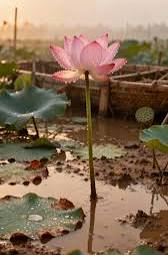
Everyone knows we need the soil of mud for lotuses to grow. Without mud, the lotus won’t manifest. You can’t grow lotus flowers on marble. Without mud, there can be no lotus.
It is possible, of course, to get stuck in the ‘mud’ of life. It’s easy enough to notice mud all over you at times. The hardest thing to practice is not allowing yourself to be overwhelmed by despair, all you can see is suffering everywhere you look. You feel as if the worst thing is happening to you.
But we must remember that suffering is a kind of mud that we need in order to generate joy and happiness. Without suffering, there’s no happiness. So we shouldn’t discriminate against the mud. We have to learn how to embrace and cradle our own suffering and the suffering of the world, with a lot of tenderness.”
No Mud, No Lotus: The Art of Transforming Suffering, Thich Nhat Hanh, P. 10-13.