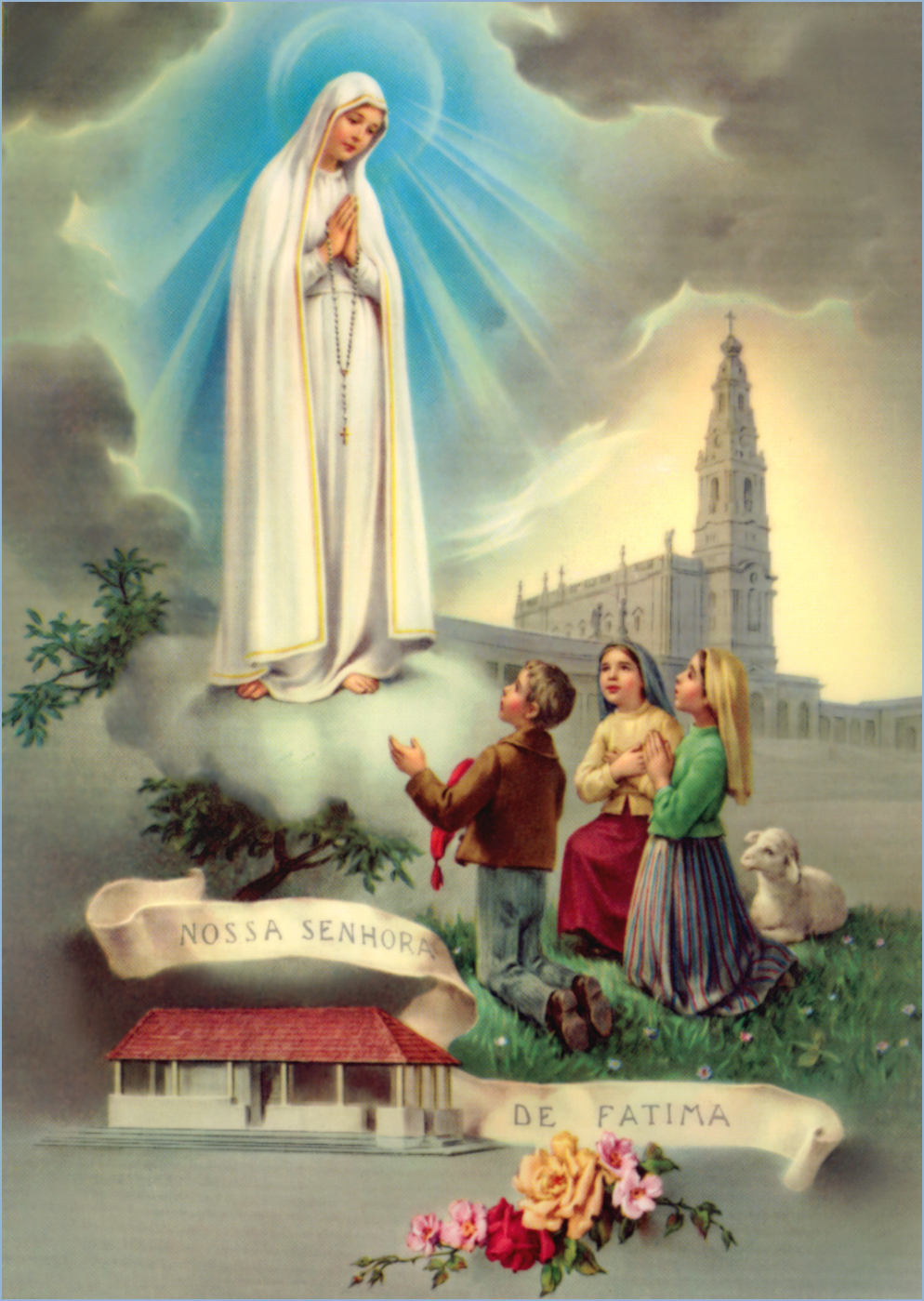
 “The Miracle of Fátima, is a series of events reported to have occurred miraculously on 13 October 1917, attended by a large crowd who had gathered in Fatima, Portugal, in response to a prophecy made by three shepherd children, Lúcia Santos and Francisco and Jacinta Marto.
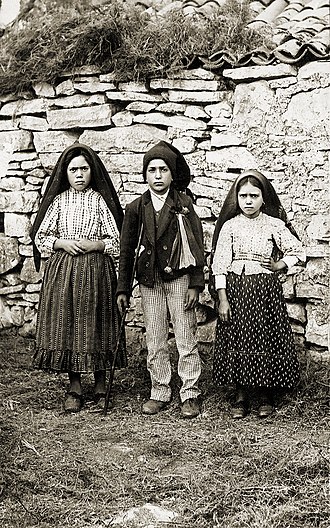 Earlier in the Spring of 1916, the children reported seeing visions of an angel. Then beginning in May 1917, they also experienced apparitions of the Virgin Mary, whom they called the Lady of the Rosary. They claimed the Lady prophesied that prayer would bring an end to the Great War, and that on 13 October that year, she would reveal her identity and perform a miracle “so that all may believe.”[13]
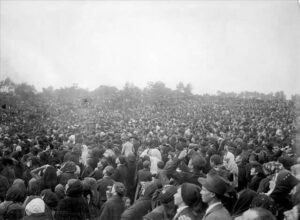 The prophecy was that the Virgin Mary (referred to as Our Lady of Fátima), would appear and perform miracles on that date. Newspapers published testimony from witnesses who said that they had seen extraordinary solar activity, such as the Sun appearing to “dance” or zig-zag in the sky, advance towards the Earth, or emit multicolored light and radiant colors. According to these reports, the event lasted approximately ten minutes.
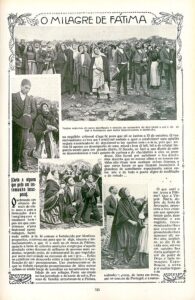 Newspapers reported the prophecies, and many pilgrims began visiting the area. The children’s accounts were deeply controversial, drawing intense criticism from both local secular and religious authorities. A provisional administrator briefly took the children into custody, believing the prophecies were politically motivated in opposition to the officially secular First Portuguese Republic established in 1910.
The local bishop opened a canonical investigation of the event in November 1917, to review witness accounts and assess whether the alleged private rev elations from Mary were compatible with Catholic theology. The local priest conducting the investigation was particularly convinced by the concurring testimony of extraordinary solar phenomena from secular reporters, government officials, and other skeptics in attendance.[1] Bishop José da Silva declared the miracle “worthy of belief” on 13 October 1930, permitting “officially the cult of Our Lady of Fatima” within the Catholic Church.
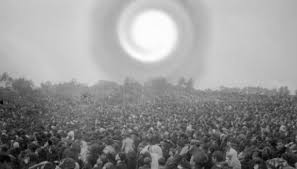 There has been much analysis of the event from critical sociological and scientific perspectives. According to critics, the eyewitness testimony was actually a collection of inconsistent and contradictory accounts. Proposed alternative explanations include witnesses being deceived by their senses due to prolonged staring at the Sun and then seeing something unusual as expected (such as eye ‘floaters’).”
en.wikipedia.org/wiki/Miracle Of The Sun