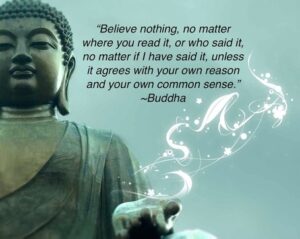
Buddhists aren’t saying that Buddha is God.
Buddha isn’t a god at all. He never claimed to be a son of God or a messenger of God.
Buddha was a teacher who said:
People hurt. Hurt people, hurt people.
We can learn not to hurt. Buddha was a man who achieved Nirvana through human effort.
Buddhists talk philosophy on waking up and being kind: to self and others.
Buddhists do not ask you to change who you believe in, who you love, or your religious practices.
Buddhists have just a simple outlook: a desire for peace.
Buddhists follow a practical guide to ethical living and mental development, avoiding extremes of indulgence and harsh asceticism. Ethical guidelines: refrain from killing, stealing, sexual misconduct, lying, and intoxicants. Wisdom & Compassion: developing insight (wisdom) and a deep wish for all beings to be free from suffering (compassion).
Four Noble Truths:
• Dukkha: Life inherently involves suffering, dissatisfaction, or stress.
• Samudaya: Suffering arises from craving, attachment, and ignorance.
• Nirodha: Suffering can cease by ending craving.
• Magga: The Noble Eightfold Path is the way to end suffering.
Core Principles of Dharma – ‘The teachings’
- Cosmic Order & Law: It is the underlying truth of reality that maintains balance and prevents chaos.
- Righteousness & Duty: It encompasses moral obligations (virtue) and duty (social/personal), often referred to as sanatana dharma (eternal, universal) or varna/ashrama dharma (specific to a stage/position in life)
- Essential Nature: It refers to the intrinsic quality of an entity, such as fire’s dharma to burn or give heat.
- Guidance to Liberation: It provides a path to escape suffering, whether through moral living in Hinduism or following the Buddha’s teachings in Buddhism.
Right= Moral or Wholesome
• Wisdom starts with: Right Understanding, Right Thought.
• Ethical Conduct: Right Speech, Right Action, Right Livelihood.
• Mental Discipline: Right Effort, Right Mindfulness, Right Concentration.